Barnaby: A Friendly Font for Every Project
Finding a typeface that feels genuinely welcoming without sacrificing clarity can be a challenge in modern typography. Many display fonts rely on stark minimalism, while others lean into excessive complexity. Barnaby occupies a distinct middle ground. It is a childish, easy-to-read display font that conveys impeccable friendliness. This character makes it a versatile asset for a wide range of creative endeavors, from professional branding to personal crafts. Its design prioritizes approachability, ensuring your message connects with your audience on an emotional level. Whether you're a designer, marketer, or hobbyist, understanding its strengths can elevate your work.
Visual Character and Personality
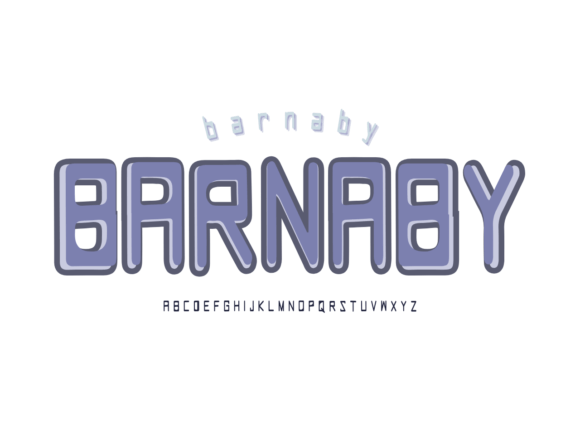
Barnaby presents a playful yet controlled aesthetic. Its letterforms feature soft, rounded edges and generous counters, which are the enclosed spaces within letters like 'o' or 'e'. This design choice eliminates visual tension, creating a harmonious and inviting rhythm. The font avoids sharp corners and rigid geometry, opting instead for subtle curves that feel handcrafted. This gives it a personality that is warm, informal, and inherently approachable. It feels less like a sterile digital creation and more like a thoughtful, human-made design. This quality makes it stand out from more conventional sans serif or serif font options.
The overall appeal lies in its versatility. While it is clearly a display font meant for headlines and short text blocks, its high legibility at various sizes is noteworthy. It maintains its charming character even when used in slightly longer phrases or subheadings. This balance is crucial for projects where tone and readability must work in tandem. The font’s style is modern without being trendy, ensuring it won’t feel dated quickly. It serves as a reliable design asset for anyone needing to inject a dose of positivity and clarity into their visual communication.
Where This Creative Font Truly Shines
The applications for Barnaby are extensive, spanning both digital and physical realms. In brand identity, it is particularly effective for businesses targeting families, children, education, wellness, or lifestyle sectors. A bakery, a boutique toy store, a yoga studio, or a children’s book author could use it to instantly convey a friendly, trustworthy brand personality. It works beautifully for logo design, where its unique shape ensures memorability. Paired with a simple icon, it creates a mark that feels both professional and personal.
For marketing and content creation, Barnaby excels in social media graphics. Its clear, bold shapes grab attention in a crowded feed, making it ideal for Instagram posts, Facebook ads, and Pinterest pins. Entrepreneurs and bloggers can use it to create eye-catching quotes, announcements, or promotional material that feels engaging rather than aggressive. In editorial design, it can bring life to magazine covers, book titles, or newsletter headers. Its friendly demeanor makes complex topics feel more accessible to readers.
The font is a favorite for personal projects and crafts. Its easy-to-read nature makes it perfect for designing greeting cards, invitations, party decorations, and scrapbook elements. The playful style translates well to print, adding a handmade touch to any project. For packaging design, especially for products aimed at a younger audience or with a wholesome image, Barnaby can make labels and boxes feel inviting and trustworthy. It bridges the gap between professional web design and personal creativity, proving its value as a multi-purpose premium font.
Practical Guidance for Using Barnaby
Integrating any new typeface into your workflow requires thoughtful evaluation. Start by considering the project’s core message. Barnaby’s strength is its friendliness, so it may not be the best fit for ultra-serious, corporate, or highly technical content. For those contexts, a more neutral sans serif font or classic serif font might be more appropriate. Always test the font in context. Create a mock-up of your design—a social media post, a business card, or a website header—to see how its personality interacts with your other visual elements.
Font pairing is essential for creating visual hierarchy and balance. Because Barnaby is a strong display typeface, it pairs best with simple, clean fonts for body text. A straightforward sans serif like Open Sans, Lato, or Montserrat provides a neutral counterpoint that lets Barnaby’s character stand out without causing visual chaos. Avoid pairing it with other highly decorative fonts, such as an ornate script font or another playful handwritten font, as this can lead to a cluttered and confusing layout.
Review the font’s included styles. Many commercial fonts like Barnaby come with multiple weights or variations. You might find light, regular, and bold options. Using these different weights can help you create subtle emphasis and hierarchy within your design while maintaining a consistent typographic voice. Always check the licensing for your intended use. If you’re using it for client work, merchandise, or products for sale, ensure you have the appropriate commercial license. This is a standard and important step when working with any professional design assets.
Finally, consider readability at different scales. Test the font at the size you plan to use it. While it’s designed for clarity, extremely small sizes might cause its rounded details to merge. For body copy or very small text, it’s always safest to choose a typeface specifically optimized for that purpose. Use Barnaby where it performs best: in headlines, logos, pull quotes, and other prominent display applications. By applying it strategically, you can harness its friendly power to make your projects more engaging, memorable, and effective.