Fall Leaf: A Typeface for Timeless Design Projects
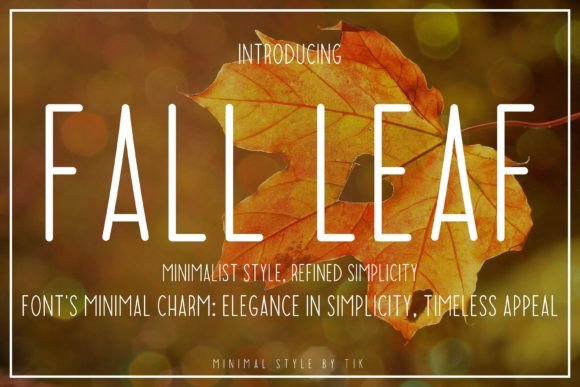
In the constant search for the right typeface, designers often find themselves caught between extremes. There are the highly decorative fonts that grab attention but sacrifice legibility, and the ultra-minimalist ones that are clear but can feel sterile. The challenge is finding a font that strikes a balance—something with enough character to be memorable, yet versatile enough to work across a multitude of applications without causing problems. This is precisely the space that Fall Leaf occupies. It’s a versatile and balanced typeface that lives up to its name, bringing a sense of harmony and aesthetic appeal to any design it touches.
With its clean lines and impeccable proportions, Fall Leaf is built on a foundation of clarity and purpose. It avoids fleeting trends in favor of a more enduring, classic structure. The letterforms are well-crafted, with subtle details that prevent them from feeling generic. Think of the gentle curve of a lowercase 'a' or the confident angle of a capital 'K'—these aren't just functional shapes; they are designed to create a specific, cohesive feeling. The overall personality is one of quiet confidence. It doesn't shout for attention, but it commands respect through its polished and thoughtful construction. This makes it an excellent premium font for professionals who need a reliable tool in their creative arsenal.
Where Fall Leaf Truly Shines
A font's true value is measured by its utility. Fall Leaf proves its worth across a surprisingly broad range of projects, acting as a workhorse for creatives, entrepreneurs, and publishers alike. Its inherent balance makes it adaptable, fitting seamlessly into contexts that demand both professionalism and personality.
For branding and logo design, Fall Leaf offers a strong foundation. A brand's primary typeface needs to be legible at various sizes, from a tiny favicon to a large sign, and it must reflect the brand's core values. Whether you're building an brand identity for a boutique hotel, a sustainable goods company, or a tech startup, this typeface provides a sense of stability and modern elegance. It can serve as the primary wordmark or as a dependable secondary font for body copy in brand guidelines.
In editorial design, such as magazines, books, and reports, readability is paramount. Fall Leaf excels here. Its clear letterforms and comfortable spacing make long passages of text easy on the eyes, which is crucial for keeping readers engaged. Imagine a lifestyle magazine using it for feature articles or a cookbook where the instructions need to be followed without strain. It brings a professional polish to any publishing project, ensuring the content is the hero.
The digital world is another area where this font proves its mettle. For web design and digital interfaces, performance and clarity are key. Fall Leaf is designed to render beautifully on screens, maintaining its legibility whether on a large desktop monitor or a small mobile device. It’s an ideal choice for website body text, app interfaces, and even social media graphics where you need text to be instantly readable as users scroll. Its clean aesthetic helps create a user experience that feels intuitive and uncluttered.
Choosing and Pairing with Confidence
Adopting a new typeface into your workflow requires more than just liking how it looks. Practical considerations are what separate a good font from a great design asset. When evaluating Fall Leaf for a project, think about the overall tone you want to set. Its balanced nature makes it a team player, but it can also hold its own as a primary font for headlines and body copy if the design calls for it.
One of the most powerful skills in modern typography is creating effective font pairing. Fall Leaf’s versatility makes it an excellent partner. Because it’s not overly demanding, it can be paired with a wide range of other fonts to create visual interest and hierarchy.
- For a classic, authoritative look, pair Fall Leaf with a strong serif font for headlines. The contrast in structure will create a clear distinction between heading and body text.
- For a clean, contemporary feel, combine it with a geometric sans serif font. This pairing often results in a minimalist and highly functional design, perfect for tech or corporate projects.
- To add a touch of warmth or personality, consider pairing it with a subtle script font or handwritten font for accents, like pull quotes or special callouts. Use these sparingly to avoid overwhelming the design.
Always test your pairings in context. Set a full page of text to see how the fonts interact. Check for readability at different sizes and on different devices. Does the hierarchy feel natural? Does the combination support the content's message? These are the questions that lead to successful typographic choices.
Practical Tips for Implementation
Before committing, take a moment to review the font's technical details. A high-quality commercial font like Fall Leaf will typically come with multiple styles, such as regular, italic, bold, and perhaps even light or semibold weights. Having these options gives you the flexibility to create nuanced visual hierarchies without introducing another typeface.
Consider the licensing. If you are working on a commercial project, from client work to products for sale, you need to ensure you have the correct license. Most font foundries offer different licenses for desktop, web, and app use. Understanding these terms is a professional responsibility that protects both you and your client. Finally, trust your eye. While these guidelines are helpful, the best design choices are made by observing how a font feels within the specific context of your project. Load it up, set some real text, and see if it helps you tell the story you want to tell. More often than not, you'll find that Fall Leaf is a quiet, reliable partner ready to help you create something beautiful and effective.