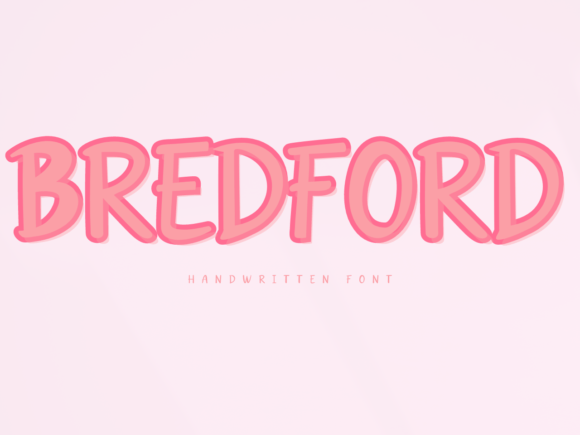
Bredford: A Modern Handwritten Font for Creative Projects
When you're working on a project that needs personality without sacrificing clarity, the typeface you choose does a lot of heavy lifting. Bredford is a modern handwritten font designed for exactly that kind of work. It brings a natural, organic feel to designs while maintaining the legibility required for professional use. This isn't a chaotic script that's hard to read at smaller sizes. It's a carefully crafted typeface that balances the warmth of hand-lettering with the structure needed for practical application across various media.
Visual Character and Style
Bredford's letterforms have a distinctively human quality. The strokes vary in thickness, mimicking the natural pressure changes of a pen or brush on paper. This variation gives the font a dynamic, lived-in appearance that feels authentic rather than sterile. The baseline has a gentle, organic flow, but it's consistent enough to maintain readability across longer passages. The connections between letters feel intentional, avoiding the overly swirly or decorative tendencies that can make some script fonts impractical. It reads as approachable, creative, and slightly refined—like handwriting from someone who takes care with their notes but isn't trying too hard.
What makes Bredford work as a modern handwritten font is its restraint. It doesn't rely on excessive flourishes or distracting ligatures. Instead, it focuses on clean, confident strokes that hold up well in both digital and print environments. The overall personality strikes a balance between casual and polished, making it versatile enough for projects that need warmth without looking informal or sloppy.
Where Bredford Works Best
This typeface finds its stride in projects where you want to inject personality without compromising professionalism. For logo design, Bredford can give a brand an immediate sense of authenticity and approachability. It works particularly well for businesses in creative fields, lifestyle brands, artisanal products, or personal services where a human touch matters. The font carries enough weight to stand as a primary wordmark while remaining distinctive enough to be recognizable.
In editorial design and packaging design, Bredford serves as an excellent accent typeface. Think pull quotes in magazines, product descriptions on artisanal packaging, or section headers in lookbooks. It pairs well with clean sans serif font choices for body text, creating a visual hierarchy that guides the reader's eye naturally. For social media graphics, especially on platforms like Instagram or Pinterest, the font brings an immediate sense of style to blog graphics, style quotes, and promotional posts. Its handwritten quality feels native to these visual-first environments.
Wedding stationery and event materials are another natural fit. Bredford's elegant yet personal character suits invitations, programs, and signage where couples want something that feels custom-designed. Similarly, art prints and creative merchandise benefit from the font's ability to convey artistic sensibility. For web design, it works well as a display or accent typeface for headers, calls to action, or feature text, though it's best used sparingly to maintain page load efficiency and readability across devices.
How Font Choice Influences Brand Perception
The typefaces you select for a project communicate before anyone reads a single word. Bredford, as a creative font, signals that a brand or project values individuality and human connection. It suggests craftsmanship, attention to detail, and a willingness to stand apart from generic corporate aesthetics. When used consistently across a brand's touchpoints—from business cards to website headers to social media templates—it helps build recognition and reinforces a cohesive brand identity.
That said, font choice also affects readability and visual hierarchy. Bredford performs best at medium to larger sizes where its character details can shine. For extended body text, pairing it with a more neutral serif font or sans serif font ensures that content remains easy to digest. This kind of thoughtful font pairing is what separates professional-looking design from something that feels haphazard. The handwritten font handles headlines, quotes, and emphasis, while the supporting typeface carries the informational load.
Audience engagement often hinges on how approachable and trustworthy a design feels. A premium font like Bredford, with its polished yet personal aesthetic, can make marketing materials, product packaging, or digital content feel more curated and intentional. People respond to designs that feel human, and a well-chosen display font contributes directly to that perception.
Practical Guidance for Using Bredford
Before committing Bredford to a project, test it in context. Set your actual headlines, pull quotes, or logo text in the font and view them at the sizes you'll actually use. Check how it renders on different screens and in print proofs if applicable. Pay attention to how the letter spacing and line height affect readability, especially for shorter text blocks like taglines or buttons.
Evaluate font pairings early in your process. Bredford tends to work well with geometric sans serifs for a contemporary feel, or with transitional serifs for something more classic. Avoid pairing it with other highly decorative or script fonts, as this creates visual competition and confusion. The goal is contrast and hierarchy, not a collection of styles.
Review what's included with the font package. Many handwritten font offerings include multiple styles, alternates, or stylistic sets that can expand your creative options. Check for multilingual support if your audience requires it, and confirm that the licensing covers your intended use—whether that's a personal project, client work, or commercial product. Understanding the commercial font license upfront prevents issues later, especially for packaging design, merchandise, or widely distributed digital assets.
Finally, consider the broader context of your design assets. Bredford is one piece of a larger visual system. Its effectiveness depends on how well it integrates with your color palette, imagery, layout style, and overall brand strategy. Used thoughtfully, it becomes a distinctive element that strengthens your visual communication rather than simply decorating it.