Margo: A Medieval Display Font for Modern Storytelling
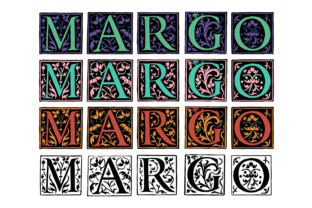
There’s a certain magic in the look of old letterpress printing—the slight imperfections, the sturdy serifs, the sense that each letter was placed with care and purpose. That’s the feeling Margo captures. This premium font isn’t just a typeface; it’s a gateway to a visual style that feels both timeless and deeply human. If you’re a designer, entrepreneur, or creator looking to infuse your work with authenticity and character, Margo offers a distinct voice that stands apart from the crowd of sleek, digital-first fonts.
At its core, Margo is a display font with a strong serif structure, but its personality is what truly defines it. The letterforms have a handcrafted, slightly uneven quality, reminiscent of the early days of moveable type. The serifs are robust and bracketed, giving each character a solid foundation. There’s a playful rhythm in its curves and terminals, avoiding the cold precision of many modern typefaces. It doesn’t shout for attention; instead, it draws you in with its warmth and storybook appeal. Think of it as the typographic equivalent of a well-loved leather-bound book or an artisan’s workshop sign.
Where Margo Truly Shines: Applications and Projects
Margo is not a workhorse body text font. It’s a creative font designed for moments where you need to make an impression, set a mood, or anchor a brand’s visual identity. Its medieval flair makes it exceptionally well-suited for specific niches and projects.
In branding and logo design, Margo can be a game-changer. For businesses in the craft, artisanal, heritage, or outdoor adventure spaces—think breweries, bookshops, bakeries, or boutique hotels—it lends an instant sense of tradition, quality, and handcrafted care. It tells a story before a single word of copy is read. Paired with a clean sans serif font for body text, it creates a beautiful contrast that is both striking and highly functional.
For editorial design and publishing, Margo excels on covers, chapter headings, and pull quotes. Imagine it gracing the title of a fantasy novel, a historical fiction piece, or a specialty cookbook. It immediately sets the genre and tone. In packaging design, it adds a layer of authenticity to products like artisanal foods, natural cosmetics, or handmade goods, communicating a commitment to craft and origin.
Digitally, while not for body paragraphs, Margo can be a powerful tool in web design for hero sections, navigation menus on themed sites, or impactful headings. Its visual hierarchy is strong, making it perfect for creating focal points that guide the user’s eye. For social media graphics, it can help posts stand out in a crowded feed, especially for quotes, announcements, or brand storytelling where a touch of nostalgia or elegance is desired.
The Practical Side: Choosing and Using Margo
Adopting a premium font like Margo is an investment in your design assets. To ensure it’s the right fit, start by evaluating your project’s core message. Does it need to convey tradition, warmth, craftsmanship, or a storybook quality? If the answer is yes, Margo is a strong candidate. If you’re aiming for ultra-modern, minimalist, or corporate sleekness, you’ll likely need a different tool.
Font pairing is critical. Margo’s distinctive character means it demands a partner that complements without competing. A simple, geometric sans serif font like Open Sans or Lato works beautifully for body text, providing excellent readability while letting Margo’s headings command attention. For a more nuanced approach, a clean, old-style serif like Lora or Source Serif Pro can create a harmonious, literary feel. Avoid pairing it with other highly decorative or script fonts, as this can create visual clutter.
Always test the font in context. Place it within your layout mockup at the intended size. Check the spacing (kerning) and ensure the visual hierarchy is clear. Does it still feel balanced when scaled down for a mobile screen? Does it hold its character when used in all-caps for a subheading? These practical tests are more valuable than any specimen sheet.
Review the included styles. Margo often comes with multiple weights or alternate characters. Understanding these options allows you to add subtle variation and depth to your designs, maintaining consistency while avoiding monotony. Finally, ensure you have the correct commercial font license for your intended use, whether it’s for a single client project, a product you’ll sell, or a website with a specific number of monthly visitors. Respecting licensing is a hallmark of professional practice.
Final Thoughts on a Timeless Typeface
Margo is more than just a display font; it’s a design strategy. It influences brand perception by embedding a narrative into your typography. It enhances audience engagement by evoking emotion and curiosity. When used thoughtfully, it doesn’t just decorate—it communicates. It can make a brand feel more professional and recognizable by tying its visual identity to a specific, evocative aesthetic.
In a landscape saturated with generic modern typography, choosing a font like Margo is a deliberate move. It’s for projects that value story, substance, and a touch of history. Whether you’re crafting a brand identity, designing a packaging label, or laying out a magazine, Margo offers a tool to create something that feels genuinely crafted, not just produced. It’s a reminder that in design, the details—the curve of a letter, the weight of a serif—can carry the weight of your entire message.