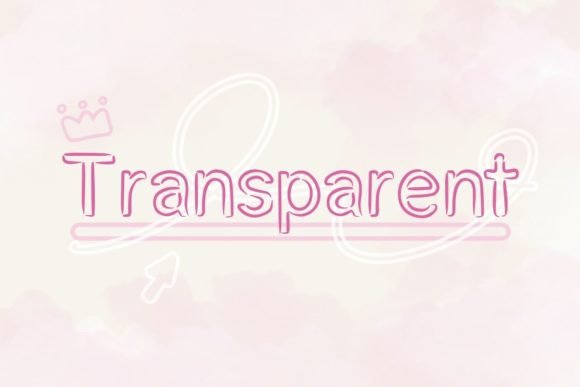
Transparent Font: A Modern Handwritten Style for Standout Designs
In a world saturated with digital perfection, there’s a growing appreciation for the human touch. We see it in the resurgence of hand-lettering, the popularity of artisanal goods, and the desire for branding that feels personal and authentic. This is where a font like Transparent steps in, offering a bridge between the raw, expressive nature of handwriting and the precision required for professional design. It’s more than just a typeface; it's a design tool built for connection.
At its core, Transparent is a handwritten font that distinguishes itself through a specific technique: it uses unconnected lines to form each letter. Think of it as lettering done with a single, confident stroke where the pen occasionally lifts, creating a sense of movement and space. This deliberate separation within the letterforms is the font's defining characteristic. Furthermore, the design incorporates intentional negative space, or "leaving space in the middle," which creates a visual trick that makes the letters appear thicker and more substantial than they might otherwise. The result is a typeface that feels both airy and grounded, modern yet approachable.
The Visual Personality of Transparent
Understanding a font's personality is key to using it effectively. Transparent doesn't whisper; it speaks with a clear, contemporary voice. Its style is best described as clean, geometric, and minimalist. The unconnected lines give it a light, open feel, preventing the heaviness that some script fonts can have. It avoids the loops and swirls of traditional calligraphy, opting instead for a straightforward, almost architectural approach to lettering.
This makes it incredibly versatile. It can feel playful and casual on a social media graphic, yet sophisticated and intentional on a product label. The inherent whitespace within the characters contributes to excellent legibility, especially at larger sizes, which is a crucial consideration for any display font. It’s a creative font that doesn’t sacrifice clarity for style, a balance that is often difficult to strike.
Where Does Transparent Shine?
The practical applications for a font like Transparent are vast, spanning both digital and physical realms. Its strength lies in projects where a personal, handcrafted feel is desired without sacrificing professionalism.
- Branding & Logo Design: For startups, boutique businesses, and personal brands, Transparent offers an instant identity. It’s perfect for creating logos that feel approachable and human. A coffee shop, a freelance photographer, or a wellness coach could use it to build a brand identity that feels genuine and memorable.
- Editorial & Web Design: As a headline or pull-quote font, it adds a dynamic, personal touch to blog posts, magazine layouts, and website banners. It breaks the monotony of standard sans serif font or serif font bodies, drawing the reader’s eye to key messages.
- Packaging & Product Design: On physical goods, the font excels. Imagine it on coffee bags, cosmetic labels, or artisan food packaging. It communicates quality and care, aligning perfectly with products that have a story to tell. Its clarity holds up well in packaging design, even when printed at smaller sizes on mugs or cards.
- Social Media & Marketing: For Instagram stories, quote graphics, and promotional banners, Transparent is a standout. Its unique structure is highly legible on screens and stops the scroll, making it ideal for social media graphics and digital marketing assets.
- Apparel & Merchandise: The font’s bold, clean lines translate beautifully to fabric. It’s an excellent choice for t-shirt designs, tote bags, and other merchandise where a trendy, contemporary look is the goal.
Practical Guidance for Using Transparent
Choosing a font is just the first step. Using it well is what separates good design from great design. Here’s how to approach Transparent as a practical tool in your design toolkit.
Evaluating Project Fit
Before you commit, ask yourself: what is the core message? Transparent is a modern typography choice that conveys creativity, approachability, and contemporary style. It might not be the right fit for a law firm or a bank aiming for a traditional, authoritative voice. However, for any project targeting a younger, design-savvy audience or emphasizing creativity and authenticity, it’s a strong contender. It functions best as a display font for headlines, logos, and short bursts of text rather than for long-form body copy.
Mastering Font Pairing
The unconnected style of Transparent pairs beautifully with cleaner, simpler typefaces. A classic combination is with a neutral sans serif font like Montserrat or Lato. The sans serif provides stability and readability for body text, while Transparent adds personality and visual interest to headings. You can also pair it with a simple, old-style serif font for a more editorial, sophisticated contrast. The key is balance; let Transparent be the star and use its partner to support and ground the design.
Considering Readability and Hierarchy
While Transparent is more legible than many script font options, it’s still a handwritten font. Use it at larger sizes where its unique characteristics can be appreciated. For text smaller than 16pt, a more conventional typeface will ensure your message is easily read. Use Transparent to establish a clear visual hierarchy: large, bold, and in your brand color for main headlines, with supporting text in a complementary, highly readable font.
Checking the Styles and Licensing
A quality premium font often comes with multiple styles—perhaps a regular, a bold, or an italic version. Check what’s included. A bold weight can be fantastic for adding emphasis. Crucially, always review the licensing. If you’re using it for a commercial project—anything from a client’s logo to products you sell—you need to ensure you have the correct commercial font license. This protects both you and the font designer and is a mark of professionalism.
Color and Customization
One of the most exciting features mentioned with Transparent is the ability to change the font color. This is where you can truly make it your own. Use a bold brand color to create immediate recognition. Experiment with gradients for a modern, digital feel. On physical products like shirts or mooks, consider how the font color interacts with the background material for maximum impact and readability.
In the end, Transparent is more than just another creative font. It’s a thoughtful piece of design that understands the need for human connection in our visual landscape. By leveraging its unique style with strategic pairing and application, designers, entrepreneurs, and creators can build more engaging, memorable, and authentic projects that truly resonate with their audience. It’s a valuable addition to any collection of design assets